Completing an eligible qualification in Australia can give international graduates the opportunity to stay and work in the country through the Temporary Graduate visa (subclass 485). Commonly known as the post-study work visa, this temporary…
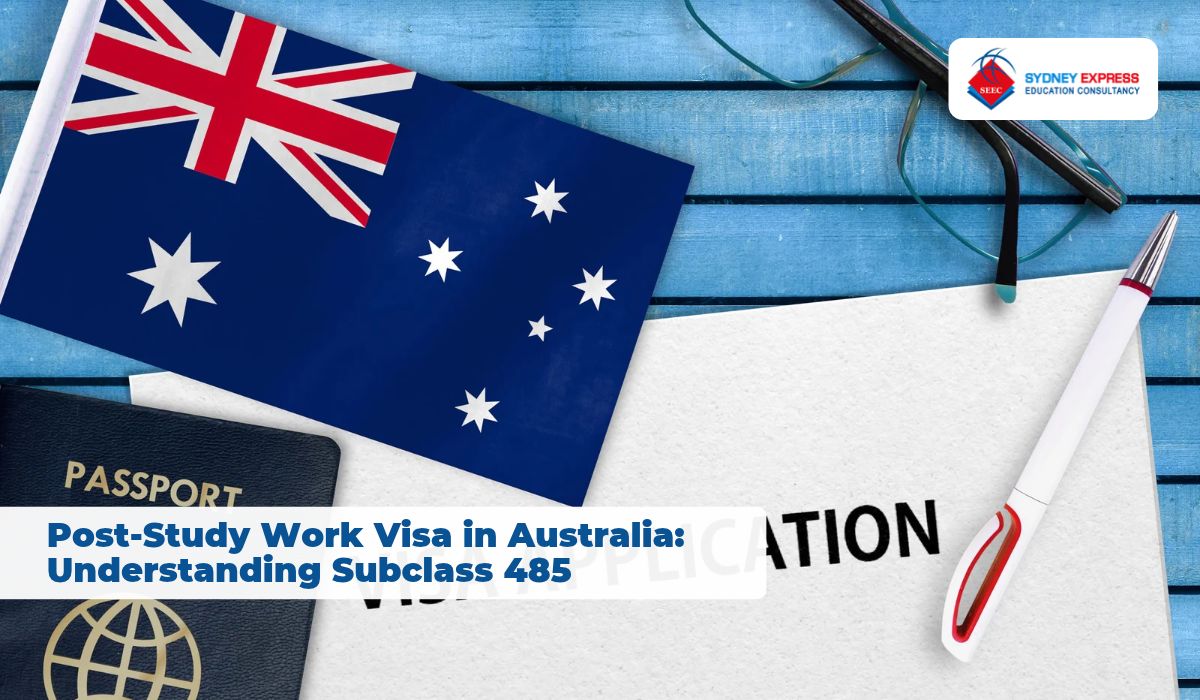
Completing an eligible qualification in Australia can give international graduates the opportunity to stay and work in the country through the Temporary Graduate visa (subclass 485). Commonly known as the post-study work visa, this temporary visa allows eligible graduates to gain work experience after finishing their studies.
For Nepali students planning to study in Australia, understanding the 485 visa requirements is important when choosing a course and education provider. The visa has two main application streams, with different qualifications, eligibility, and stay requirements. This guide explains how each stream works, what graduates need to qualify, the work rights available, and how to prepare an application.
What is the Temporary Graduate Visa (Subclass 485)?
The Temporary Graduate visa (subclass 485) is an Australian temporary visa that lets eligible international students who recently completed an approved qualification at an Australian education provider stay in the country after their studies. Also known as the post-study work visa in Australia, it gives graduates a chance to gain work experience, explore employment opportunities, and continue their professional development.
Unlike the student visa (subclass 500), which allows international students to stay in Australia while undertaking an eligible course, the subclass 485 visa is designed for eligible graduates who want to remain in Australia after completing their studies. It provides a temporary period to work and, where permitted, undertake further study.
However, completing an Australian qualification does not automatically make someone eligible for this visa. Applicants must meet the requirements of their chosen stream, including the relevant qualification, Australian study, age, and other visa criteria. The 485 visa also does not guarantee permanent residency. Anyone wishing to remain in Australia beyond its validity period must independently meet the requirements of another eligible visa.
Which 485 Visa Stream Applies to Your Qualification?
The Temporary Graduate visa (subclass 485) has two main streams for initial applicants. The right stream generally depends on the type of qualification you completed in Australia to meet the temporary graduate visa study requirement. Graduates applying through the vocational stream must also meet specific occupation and skills assessment requirements.
| Visa stream | Relevant qualification | General stay period |
| Post-Higher Education Workstream | Eligible bachelor’s degree or bachelor’s honours degree | Up to 2 years |
| Eligible master’s degree by coursework or extended | Up to 2 years | |
| Eligible master’s degree by research or doctoral degree | Up to 3 years | |
| Post-Vocational Education Workstream | Eligible associate degree, diploma or trade qualification closely related to an occupation on the MLTSSL | Up to 18 months |
An eligible Graduate Diploma may also qualify for the Post-Higher Education Work stream in specific circumstances. Its general stay period is two years, although it may be longer if the previous study used to meet the visa requirements would have attracted a longer stay period. These are general stay periods, and applicants should check the current Department of Home Affairs requirements before applying.
1. Post-Higher Education Workstream
The post-higher education work stream is generally for international graduates who have completed an eligible degree-level qualification or higher at an Australian education provider.
Eligible qualifications include bachelor’s degrees, bachelor’s honours degrees, master’s degrees and doctoral degrees. A graduate diploma may also qualify if it is completed in the same or following academic year as an eligible degree and is related to that qualification. A standalone graduate diploma does not automatically meet this requirement.
The length of stay depends on the qualification used to meet the visa study requirement:
- Bachelor’s degree, including honours: Up to 2 years
- Master’s degree by coursework or extended: Up to 2 years
- Master’s degree by research: Up to 3 years
- Doctoral degree: Up to 3 years
An eligible graduate diploma generally has a two-year stay period. However, a longer period may apply where the applicant’s previous study would have attracted a longer stay period.
2. Post-Vocational Education Workstream
The post-vocational education work stream is designed for graduates who have completed an eligible associate degree, diploma or trade qualification. However, holding one of these qualifications does not automatically make someone eligible.
The qualification must be closely related to an occupation on the Medium and Long-term Strategic Skills List (MLTSSL), which the applicant must nominate when applying. Their skills must also be assessed as suitable for that occupation by the relevant assessing authority. Applicants must provide a valid skills assessment with their visa application. If they have not received the assessment by the time they apply, they must provide evidence that they have already applied for one.
Before choosing this stream, graduates should check the requirements of the relevant assessing authority. Some authorities require a higher level of study or additional evidence beyond the minimum qualification needed for the visa. This is why checking the relationship between the qualification, nominated occupation and assessment requirements is important before applying.
The post-vocational education work stream allows eligible applicants to stay in Australia for up to 18 months.
3. Second Post-Higher Education Workstream
Eligible graduates may be able to apply for a further stay through the Second Post-Higher Education Work stream. This is not a third initial application stream, but a subsequent visa option for certain Temporary Graduate visa holders who meet the regional study and residence requirements.
To qualify, applicants must generally:
- Hold a temporary graduate visa in the post-higher education work, post-study work or eligible replacement stream.
- Have obtained the degree that led to their first temporary graduate visa from an eligible Australian education provider with a campus in a designated regional area.
- Have lived only in a designated regional area for at least two years immediately before applying for the second visa.
- Have undertaken any work or study during their first eligible Temporary Graduate visa period in a designated regional area.
The additional stay period is generally one or two years. The length depends on the regional category of the area where the applicant studied and where they lived while holding their first temporary graduate visa. Applicants should check the current regional eligibility requirements before applying.
Who is Eligible for the 485 Visa?
To qualify for the Temporary Graduate visa (subclass 485), applicants must meet requirements relating to age, previous visa status, Australian study, English language ability, health and character. The criteria vary depending on the visa stream.
1. Age and Previous Visa Requirements
The general age limit is 35 years or under at the time of application. Exceptions apply to certain applicants, including eligible master’s research and doctoral graduates, who may qualify up to the age of 50. Different age arrangements may apply to Hong Kong and British National Overseas passport holders.
Applicants must also generally:
- Have held a student visa within the six months before applying.
- Hold an eligible visa when applying, such as a student visa, Bridging Visa A or Bridging Visa B, or another eligible substantive visa.
- Be physically in Australia when applying for either of the two main streams.
2. Australian Study Requirement and CRICOS Registration
Applicants must meet the Australian study requirement within the six months immediately before applying. This involves completing one or more eligible qualifications that meet both of the following criteria:
- At least 92 weeks of CRICOS-registered study: The registered course duration must total at least 92 weeks. Applicants should check the course duration on the Commonwealth Register of Institutions and Courses for Overseas Students (CRICOS).
- At least 16 calendar months of study in Australia: Applicants must have physically studied in Australia for at least 16 calendar months. The course must be delivered in English by an Australian education provider while the applicant holds a visa that permits study.
Credit transfers, exemptions and overlapping courses may affect whether an applicant meets these requirements. Students should confirm how their study history is calculated before applying.
3. English Language Requirements
Applicants generally need to provide results from an accepted English language test taken within the 12 months before applying. Some applicants may qualify for an exemption.
For tests taken on or after 7 August 2025, the standard requirements stated in the draft are:
| English test | Minimum requirement |
| IELTS Academic or General Training | Overall 6.5, with at least 5.5 in each component |
| PTE Academic | Overall 55, with minimum scores of 40 in Listening, 42 in Reading, 41 in Writing and 39 in Speaking |
Other accepted tests have different score requirements. Nepali passport holders should generally prepare to provide an accepted English test result unless another exemption applies.
4. Health, Character and Insurance Requirements
Applicants must meet the Department of Home Affairs’ health and character requirements and provide evidence of adequate health insurance.
Applicants aged 16 or older must also provide evidence that they have applied for an Australian Federal Police (AFP) check within the required 12-month period before applying. A Nepal Police Clearance Certificate does not replace this Australian requirement. Additional overseas police certificates or character documents may be required, depending on the applicant’s circumstances.
Why Your Course and Education Provider Choice Matters
Your choice of course and education provider can affect your eligibility for the Temporary Graduate visa (subclass 485). Before enrolling, check whether the qualification is eligible for your intended visa stream and whether the course meets the relevant Australian study requirements. A CRICOS-registered course does not automatically qualify you for the 485 visa. You must also meet the requirements relating to qualification type, course duration and study history.
Pay particular attention to the qualification you plan to complete. A Graduate Diploma may qualify for the Post-Higher Education Work stream in specific circumstances, such as when it is related to an eligible degree and completed in the same or following academic year. A graduate certificate, however, is not listed as a standalone eligible qualification.
Credit transfers and exemptions can also affect how your study contributes to the Australian study requirement. Check these details before accepting an offer, rather than relying solely on information provided in course marketing materials. Your decision should also reflect your academic interests and career plans, not just the possibility of obtaining a post-study work visa. Review the current visa requirements alongside your education goals when planning your studies in Australia.
Before beginning your study journey, make sure you understand the documents required for an Australian student visa in 2026 so you can prepare the necessary paperwork for your application.
What Can You Do on a 485 Visa? Work Rights and Family Members
Work Rights on a 485 Visa
The Temporary Graduate visa allows eligible graduates to live, work, and study in Australia temporarily while their visa remains valid. They can explore employment opportunities across different sectors and gain professional experience after completing their studies.
However, some professions, such as healthcare and teaching, require additional qualifications, registration, or licensing. The visa does not guarantee employment or a job in the graduate’s field of study.
Can You Include Family Members?
From 13 November 2026, new rules apply to family members included in Temporary Graduate visa (subclass 485) applications. Under these rules, eligible family members must apply at the same time as the primary applicant. They can no longer apply separately later as subsequent entrants, even if the primary applicant is eligible to include them.
For most applicants, family members must have been included in their previous Student visa or, for a second 485 visa, their previous Temporary Graduate visa. Exceptions apply to certain Pacific and ASEAN nationals, PhD graduates, students whose studies were fully funded by a foreign government, and eligible newborn children.
The primary applicant must be in Australia when applying, while eligible family members can be inside or outside Australia. Nepali students should check their previous visa details and the latest Department of Home Affairs guidance before applying.
These 485 family-member rules are separate from the changes affecting Student visa applicants. Nepali students planning to bring a spouse or dependent children to Australia should also understand the 2026 Australian Student visa changes, as these may affect their family arrangements before graduation.
How to Apply for the Temporary Graduate Visa (Subclass 485)
When Should You Apply for the 485 Visa in Australia?
Applicants generally need to apply for the 485 visa in Australia within six months of completing their eligible qualification. The relevant date is usually when the education provider confirms in writing that the applicant has met all academic requirements, not the date of the graduation ceremony or degree conferral.
For example, a university may issue a course completion letter several weeks before the graduation ceremony. This completion notification is important when determining the application deadline.
Keep your official completion notification and check your deadline as soon as your education provider confirms that you have completed your course.
What Documents Should You Prepare?
Applicants applying for the Temporary Graduate visa (subclass 485) should prepare documents based on their chosen visa stream and personal circumstances. The following is a general checklist:
Identity and education documents
- Valid passport and identity documents.
- Course completion letter.
- Academic transcripts and qualification certificates.
- Evidence of meeting the Australian study requirement.
English, health and character documents
- Accepted English language test results, if required.
- Evidence of adequate health insurance.
- Australian Federal Police (AFP) check application evidence.
- Overseas police certificates, if required.
Additional documents
- Skills assessment evidence or other required documentation for the post-vocational education work stream.
- Documents for eligible family members included in the application, where applicable.
Check the Department of Home Affairs requirements for your chosen stream before submitting your application.
What is the 485 Visa Application Fee, and How Long Does Processing Take?
The 485 visa Australia application fee can change, and additional charges may apply when including eligible family members. Applicants should check the current fee before submitting their application.
Processing times vary depending on the application, the applicant’s circumstances, and the department’s assessment workload. Incomplete applications or requests for additional information may affect how long a decision takes. Applicants should also check the latest processing estimates before applying.
What Happens After Your 485 Visa Expires?
The Temporary Graduate visa (subclass 485) allows graduates to stay in Australia for a limited period. Before it expires, visa holders should review their immigration options and plan their next steps.
Depending on their qualifications, occupation, work experience, and other circumstances, some graduates may qualify for another Australian visa. However, each visa has separate eligibility requirements, and holding a 485 visa does not automatically lead to permanent residency or guarantee eligibility for another visa.
Graduates who do not qualify for another visa must make arrangements to leave Australia before their lawful stay ends. It is important to review available options well before the 485 visa expiry date to avoid last-minute complications.
Important Note / Disclaimer
Visa requirements, eligibility criteria, application fees, processing times, and immigration policies can change. This article reflects information available as of 24 November 2026 and is intended for general informational purposes only.
Before applying for the Temporary Graduate visa (subclass 485), check the latest requirements through the Australian Department of Home Affairs, particularly those relating to regional eligibility and family member applications. Individual eligibility depends on personal circumstances, and this article should not be treated as individual migration or legal advice.
Sydney Express can also guide students who are unsure about their visa application process, helping them understand the available options and the steps they may need to take when planning their studies in Australia. If you need guidance on your study plans or have questions about the visa application process, contact Sydney Express for support.